Audio embeddings: search for acoustic resemblance
Keep sound evidence separate from the words a transcript captures.
A pump rattle and a spoken maintenance instruction need different kinds of information. Sound representations can help find acoustic resemblance; a transcript can help find words. Choose the form that preserves what the question asks about.
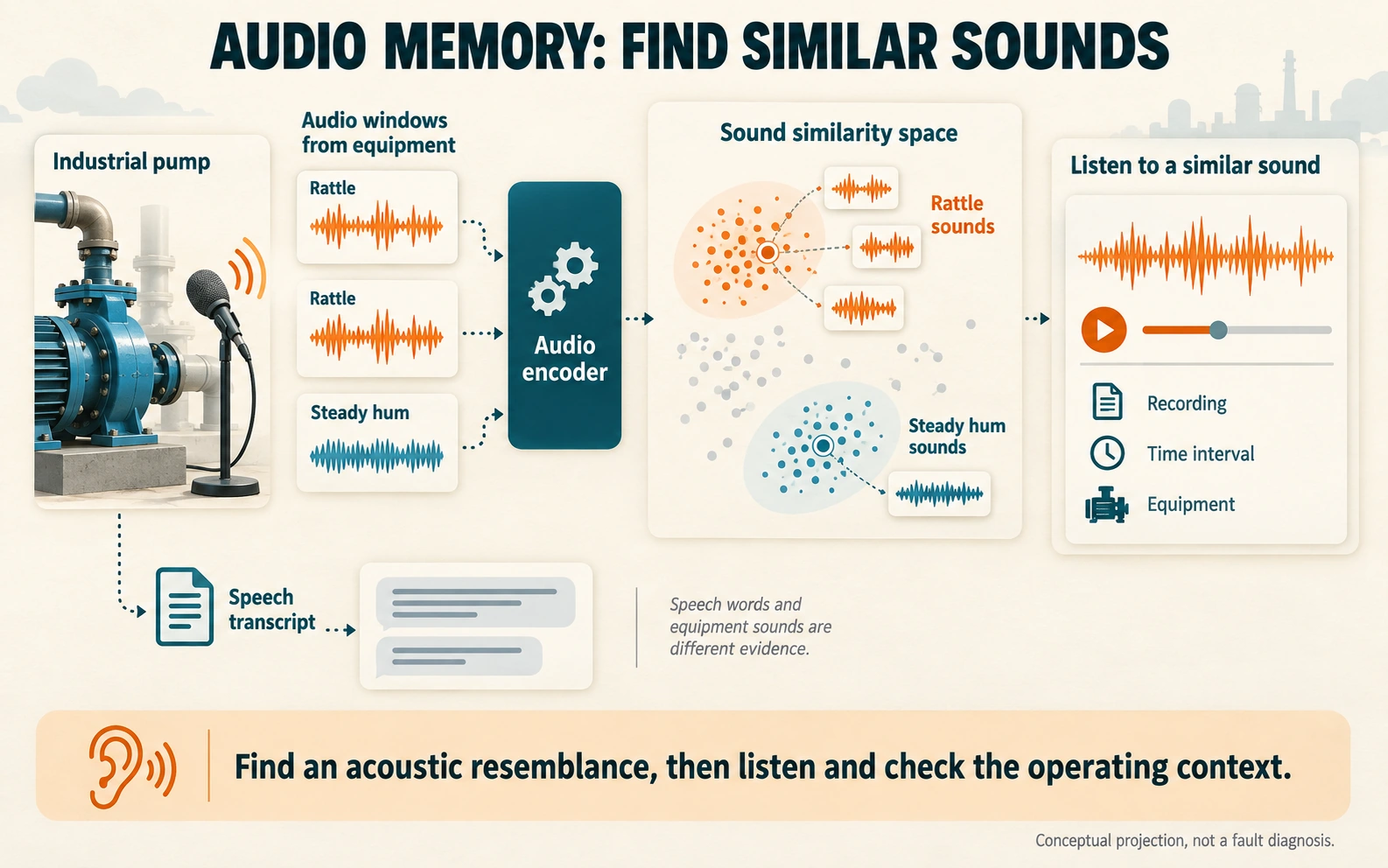
What the space represents
A recording can contain speech, equipment sounds, and background noise. A transcript preserves an interpretation of spoken words. An audio representation can support a different search, such as finding recordings with a similar sound pattern. CLAP is a research example connecting audio and natural-language concepts through training.
What to retain beside the vector
Keep the original recording, interval, device and recording conditions, equipment identity where known, model version, and permissions. Preserve a transcript as a linked interpretation when speech matters. It should not replace the sound needed for an acoustic question.
Where the first approach can fail
An agent using transcripts alone cannot investigate a pump rattle that nobody described in words. A sound match may instead reflect background machinery or microphone placement. Test whether the representation distinguishes the event of interest in the actual recording environment.
How it serves a decision
Retrieve a relevant audio interval, listen to it, and compare it with operating conditions and confirmed maintenance findings. Acoustic resemblance does not prove an identical fault. If the recording is a conversation, speaker identity and permission require their own checks.
See media evidence and combining evidence.
External source
CLAP, 2022. Reviewed 18 September 2026.
Continue the story: Represent places and changes over time.
Cite this page
Written by Murali Sid, Founder and AI Systems Architect, last updated 15 October 2026. Licensed CC BY-SA 4.0, so quote it freely with attribution.
Murali Sid (2026). Audio embeddings: search for acoustic resemblance. Agentic Architecture Skills. https://www.agenticarchitectureskills.com/memory/audio-embeddingsMachine-readable version of this page: /memory/audio-embeddings.md